Nature Writing
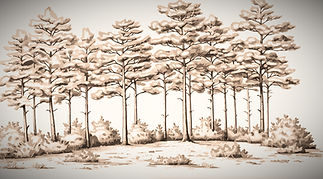
My writing moves along the border between landscape and consciousness, where mountains are never only geological forms, but living presences that shape memory, myth, and identity. Influenced by the atmosphere and philosophical undertones of my essay "Metaphysik der Dinariden", I approach nature not as scenery, but as a metaphysical field — a place where history, silence, instinct, and the sacred continue to speak beneath the surface of the visible world.
The Dinaric landscapes in my work are harsh, intimate, and deeply symbolic. Stone, fog, forests, rivers, and abandoned paths become carriers of ancestral memory and existential reflection. I am drawn to the tension between wilderness and civilization, solitude and belonging, destruction and renewal. Nature appears not as passive background, but as an active force that mirrors inner states and reveals hidden dimensions of human experience.
My style combines poetic observation with philosophical introspection, often blurring the line between essay, prose, and meditation. I write slowly, attentively, allowing atmosphere and rhythm to carry meaning as much as narrative itself. Through this approach, nature writing becomes a way of listening — to landscapes, to forgotten histories, and to the deeper currents moving beneath modern life.
Entrance into the Underworld
(Introduction to the book "The Underworld", by Anne-Kathrin Godec and Ivo Lučić)
To the superficial eye, the Dinaric karst is only a chain of stone and forest, of barren heights and wide plateaus. But the essence of the Dinarides lies equally in the visible, above-ground world and in the invisible underground world. Beneath the greyness and whiteness of the mountains and the greenery of the forests there exists another kingdom, untouched by sunlight, protected from simple access. A kingdom of hidden paths, spaces, even cathedrals of tufa formations, underground rivers and water veins, pits and labyrinths of caves and stone passages. The Dinaric karst is not only what is visible above; it is a living organism in which the external phenomena are in constant interaction with its interior. Geographically speaking, the Dinaric karst is one of the most complex karst systems in the world, whose beauty and sublimity were born precisely from that diversity, multilayeredness, and complexity. We can learn much about this when we follow the geological, geomorphological, biological, speleological, ecological, meteorological, and cultural works of the tireless community of researchers. And alongside their works there are also those from the fields of art, literature, philosophy, or mythology, through which the Dinaric karst becomes at once a metaphor and a mirror of philosophical—especially bioethical, anthropological, biosemiotic, and geopoetic—understandings of nature or deep ecology. So many perspectives can be taken toward both the underground and the above-ground phenomena.
And—I want to say immediately—although this book speaks predominantly about the underworld, it actually wishes to correct the balance in favor of the underground, which together with the upper world forms the complete world of karst. The underground world is rich because of the above-ground world and vice versa. All of it is one, all of it is—as Ivo Lučić and I think—one living organism in constant mutual dialogue.
But now, the underworld:
It is not easy to enter the underworld. Before we descend into it, let us first see what the underworld means from different perspectives.
From a biological perspective, karst is a miracle of adaptation full of blind fish, colorless crustaceans, olm salamanders, and countless slow and long-lived creatures whose metabolism resembles the patience of rocks. Evolution here unfolds—or so it seems to me—not in the competitiveness that governs above-ground development, but more slowly and in complete silence. Such beings teach us another calculation of time, one that places emphasis not on development but on endurance. Karst is a biological laboratory of slowness.
Anthropologically speaking, in the underground world we encounter people such as shepherds, monks, even smugglers, who found there protection and shelter, archives, ritual sacred places, and hideouts. The underworld, like the rest of the world, is always also a political, spiritual, and existential place. And for several decades now, the Anthropocene has turned the lower kingdom—where possible—into a space of exploitation and waste disposal. Whoever enters the underground world of the Dinaric karst enters layers of human and geological history.
In literature (which I understand better than the other disciplines), the underground karst is always a projection of the surface: a place of disappearance, transition, a threshold between worlds. In older stories and in mythology, caves are gates to the otherworld, wombs of the earth, places of spiritual transformation. They are also places of withdrawal, quests for truth, and enlightenment. With caves (not only karstic ones) we find ancient symbolisms: descent as a path to knowledge. Like Orpheus or Dante descending into the eternally dark world, or heroes from South Slavic epics such as Marko Kraljević or Relja Krilatica descending into abysses. And we, as readers, entered with them into the lower layers of human consciousness.
Then there were researchers like Jovan Cvijić, important for the discipline of karstology as well as for literary descriptions of nature (because they wrote artistically). Storytellers of seismology and meteorology such as Oton Kučera or Andrija Mohorovičić. There were travel writers like Alberto Fortis who greatly influenced literary descriptions of karst, including its underground part. And then poets: Srečko Kosovel, Vladimir Nazor, Jure Kaštelan, Petar Gudelj, just to name a few. They wrote a great poetics of karst with themes of national identity connected to a harsh nature in which life is difficult and dangerous. We hear about childhoods surrounded by stone cliffs and wartime events. They write of karst as if it were a landscape of the soul, with magnificent heights and archaic depths. And sometimes the Dinaric karst is a place of metaphysical emptiness and extraordinary clarity.
Psychologically, karst can be read as a mirror of inner topography. It seems that in narrow pits hangs the repressed memory of humanity, in spacious caves lies the breadth of the subconscious, and sinkholes remind us of the fragile and porous structures of psychological compositions where the upper or conscious part can collapse into the depth of subconscious chambers, suddenly confronting them just as crises break into human existence and sometimes swallow parts of it. The cave demands slowness, attention, humility. It deprives man of the illusion of control and forces him into a measured relationship with darkness, silence, and the feeling of separation from outer space.
In mythology, the Dinaric karst is a space of boundaries. It is the dwelling place of dragons and other monsters, of water nymphs in underground rivers, the location of ancestors in stone. It is the kingdom of the dead. But the earth there is not dead, but animated, and in old stories this is not naïveté but a poetic cartography of the invisible. It is the awareness that man is not above the landscape but part of it, and that death is part of life.
In mysticism, the karst cave is a place of initiation and a temple of ritual traditions in various religions, from pagan beliefs through Christian to Muslim, depending on the region and the time. Here darkness is not an enemy but a necessary condition of transformation. Whoever is willing to remain long enough in darkness begins to hear, see, and think differently. Becomes another person.
The cave demands slowness, attention, humility. It strips a person of the illusion of control and forces them into a measured relationship with darkness, silence, and the feeling of separation from the outer world.
This book does not wish to be only a description of a geological phenomenon. It is an invitation to slow down, to descend, to become curious about all the dimensions of underground existence and about what it metaphorically and metaphysically points toward. While descending into speleological phenomena, we equally enter the sometimes invisible depths of human nature, often just as hidden and inaccessible as certain places in the Dinarides. And while reading maps, gathering data, listening to stories and testimonies, while determining present conditions and uncovering layers of memory, the karst ceases to be an object of observation and becomes more of an interlocutor, through whose veins underground waters flow, through whose lungs air circulates, through which time flows, consciousness flows.
In this book you may hear two different voices. Ivo’s voice — clear and realistic, always searching for visible truth. The voice of a man who speaks about literal physical phenomena and who knows how to read the traces of human interventions in the karst. He is a great protector of this landscape which he deeply understands. The rhythm of his own life flows in accordance with the karst world; from childhood he adapted to all those impulses of nature which other people have long forgotten or never even experienced. He reads the Dinarides like an open book on every level of scientific, cultural, and ecological interest. He is a man of karst not only through knowledge and education, but through a life experience developed in symbiosis with it. This nature taught him to receive information not only through all physical senses, but through metaphysical ones as well.
The second voice in the book is mine. I was not born here, but during twenty-five years of life in the Dinaric karst I allowed my inner landscape to assume karst structures. Or perhaps I was born with an inner landscape that finally recognized itself in the external world of karst. Perhaps the lack of coherence between my inner and outer milieu led me toward those places in this landscape that eventually gave me a feeling of a completely new and unexpected harmony. My perspective in the texts about the lower world of karst is metaphorical. I walk through an inner landscape which mirrors the outer one, but symbolically. And therefore I notice and connect different things.
And so Ivo and I thought that together we might create a more complete — perhaps even holistic — image of the karst underworld, following its traces not only through geology and karstology but also through geopoetics and geopsychology, studying the influence of environment — especially the underground — on the human psyche and behavior, while also connecting environmental factors with mental states and discovering toward which human decisions this leads in relation to ecology.
At first I did not know that all this would become a very personal investigation, because during the years in which we collected texts for this book, I went through a personal crisis. It was one of those crises from which a person can emerge only completely changed. A situation in which my personal world became so darkened that a karst cave literally manifested itself in my workroom. It was a phase of life in which not one stone of apparent foundation remained in place. Perhaps it was only the most ordinary identity crisis, perhaps nothing special, but I experienced it rather dramatically, and so I wrote every text from some personal pit of my own — probably the Sušička Pit in Tribalj — from which I rarely moved away.
At that time Ivo truly crossed the Dinaric karst in every direction, immersed himself in the many facets of karst life, wrote about it, conducted interviews and spoke with real people. He explored specific karst phenomena and sent me reports. I did not. I waited in my own hole, somewhat adapted to the dark atmosphere, somewhat familiar with every corner of my rocky walls, unwilling to leave. And down there I thought and wrote more slowly than usual, because in the dense air of the underground world ideas form slowly, thoughts move in slow motion and sometimes lead nowhere.
Yes, I would emerge for our legendary Krasopis festivals. I met some of the most inspiring scientists, artists, and writers of the Dinarides, inhaled their inspiration, their dedication and competence. In my mind I recorded every detail of karst landscapes. I listened especially carefully to speleological lectures by experts such as Jasminko Mulaomerović, whose knowledge of caves is so vast that it leaves one speechless — knowledge of cave fauna, geological connections, and the cultural significance of the underground. People such as Teo Barišić and Aida Barišić — and their team — who discovered the largest cave system of the Dinaric karst, the so-called Crnopac system, are true discoverers of the unknown, possessing both the spirit of adventurers and scientists, a combination rarely encountered today. Or Darko Bakšić, who descended into the deepest cave in the world, traveled through it for more than ten days, slept inside it, and explored every corner. There are many more experts of this kind in the Dinaric karst; I simply have not yet met them, and therefore cannot speak about them. But naturally, for a book called The Lower World, speleologists are the greatest and most important source of information.
Only, their pits did not resemble mine, because mine was more metaphorical. And that is why I can speak about cave life more from a human, psychological, literary, emotional, perhaps philosophical perspective. And I am deeply grateful that Ivo Lučić, during his travels, would from time to time return and throw another new text into my pit, and that he was patient enough to wait for my response.
It is not easy to enter the underworld.— for many reasons.
First of all, you are afraid. At least, I was afraid. Afraid because the entrance is such an inconspicuous opening between juniper and blackberry bushes. I move carefully across limestone pebbles and approach the black fissure from which cold air emerges. Already here the world is different, although there is no pompous entrance, no pathos. But once I step inside, the wind falls silent, colors disappear, the ground beneath my feet becomes damper. With the first step into the cave, the sun loses its authority. Light becomes blurred, fragmented. It remains hanging on stone protrusions or floating in points through the air. The temperature drops. The body adapts to the new surroundings faster than the mind. The skin shivers, breathing becomes deeper, movements more cautious. As if I am becoming an animal beneath stone.
The shaft leads downward, gently at first, then more steeply. My hand searches for support on the wall and often grasps only emptiness. But where it touches rock, the stone is not smooth but rough from thousands of years of water movement — grooves, hollows, stone waves. Every touch is contact with time. Water drips from the darkness, irregularly, but still like the barely audible pulse of the earth.
Further on, the light disappears completely. The space closes in, sounds acquire another meaning. The fall of a pebble is both near and distant at the same time. I hear myself breathing. Footsteps echo, distorted, unfamiliar. It is strange to listen only to oneself. The lamp cuts a cone of light into the darkness. Everything outside that circle is only suggestion. And the darkness is not empty. It is dense, almost material, like tissue through which I move. It accepts contours, swallows them, creates landscapes of shadows that exist only for a few seconds.
A narrow passage demands that I crawl. I force my bag ahead of me. My shoulder brushes against rough stone. In the tightness of the space the body loses its habits. It becomes alarmed, alert, perhaps panicked. Every muscle suddenly knows why it exists.
And then the cave suddenly opens. As if it were a hall in the middle of which lies motionless black water. Not a lake — perhaps a larger puddle with a surface smooth as glass. There is no wind. Not a single insect disturbs the silence.
You stop and listen to how the chamber itself demands silence. Insists upon silence. Every sound feels inappropriate. Thoughts slow down; I enter a bodily state somewhere between wakefulness and sleep.
This entire journey is not a descent but a movement inward. To the place where the cave ceases to be a place and becomes a condition, where a person does not dominate but listens, where one does not explain but perceives. And senses some new knowledge about the existence of another world beneath the everyday one — somehow eternal, dark, patient, and calm.
But there, beyond the pool, is another opening. From where I stand it is only a black line. There the pit begins. I am going to enter it. That is where fear truly starts. There is no more feeling your way along walls, no more support, no more crawling. There is only a black abyss into which you either fall to certain death, or descend little by little with a rope, step by step, successively, deeper and deeper.
It is not easy to enter the underworld.
Even if you have grown accustomed to the idea of temporarily entering darkness, you are still afraid of falling. The change would be too sudden if you rushed into that hostile atmosphere — at least for a human being accustomed to sun, to light, to walking across safe and visible terrain. At least for me.
Already at the edge of the shaft I notice that unusual silence which is not empty but almost mineral in its fullness. As if the rock itself were holding its breath. The carabiner does not easily catch onto the anchor fixed there by some mountaineer or speleologist long before I ever thought of this adventure. And of course there are always those who walked this path before you, those who know that there is absolutely no difference between a physical and a psychological descent into a pit. All those Jungs and Hillmans, and poets such as Ivan Goran Kovačić, who by writing about pits showed us the equivalence of spiritual depth and physical or psychological falling — a fall that does not awaken fear of death but, as Kovačić writes: “Perhaps from fear that we are nevertheless alive.” The disobedience of the equipment is only proof of my own inner hesitation, my reluctance.
And yet something still pulls me downward, something between curiosity and the determination to create irreversible facts. But it is not sudden like falling; it is more like a slow release. I feel the secure weight of the harness around my waist, and this gives me an almost naïve courage to slowly lift my feet from the ground. Something is still holding me. Just a short, barely audible crunch of gravel and gravity has already taken over.
For a moment it is beautiful. I feel my own weight in my muscles and emptiness in my stomach. I am moving, descending, which I recognize more and more from the increasingly cold air and the moisture forming a thin layer upon the skin of my face. I begin to breathe differently. More shallowly, more quietly, more controlled. Respect for depth grows instinctively. My outstretched hand touches different walls of the pit each time. Sometimes sharp edges of rock, sometimes dusty hollows, sometimes the slippery consistency of something unknown. Even the rope itself tells us where we are at every moment. Its vibration carries the slightest movement. Rhythmically we move deeper and deeper. I do not perceive the depth visually with the lamp on my head but acoustically.
It is not easy to enter the underworld..
For ontological reasons. To leave the world of horizontality and enter the world of pits means becoming accustomed to verticality in both space and time. Above there was landscape and breadth; here there is concentration upon a point and a condition. As if I were entering a place where the laws of time — still dictated above by the almost unnoticed sequence of day and night — no longer apply. As if I had slowly entered the timeless memory of a place. A feeling of clarity without distractions. Grounded time.
And immediately I am overcome by the fear that there is no return from this. And I cannot decide whether that is a good or a bad thing.
And then suddenly — ground beneath my feet. How deep am I? One hundred meters? Five hundred? I do not know.
This is not an arrival somewhere; it is more like entering a different aggregate state. My feet cautiously touch the floor. The ground is unstable enough to create uncertainty. I crouch and touch cold rock and something like mud, something sticky. And pebbles. I feel the cold even through the soles of my shoes. I do not know how wide this place is, because my lamp does not reveal the boundaries of the chamber. Perhaps there is a hall here like the one above.
The ground speaks of sedimentation and stillness. Even the smell contains something odorless, something sterile, with traces of metal and mineral. Every movement is muffled, heavy. Footsteps become more precise and deliberate. I am reduced to certain senses. The others dissolve into emptiness.
Here the karst is not dramatic, but somehow truthful.
It is not easy to enter the underworld, because it could become a place from which you no longer wish to return. Although unknown and not particularly comfortable, this place has the advantage that very few people will follow you here. Remaining in a cave is so contrary to instinct that you can count on a certain solitude. It frees you from exhausting social roles, from obligations and the need for decisions. Without a sense of time, without a stage for any kind of ego. At the same time it can truly be a place of protection, a place distant from the dangers of human accusations, human thoughtlessness, projection, hatred, malice, or serious harm. Only thick walls around me and rock that does not lie, does not judge — simply exists. And the cave gives you the possibility of disappearing without dying. Silence without finality.
From my backpack I take out a blanket. I do not unfasten the rope, just in case — and I laugh at myself for how brave I actually am.
I think this chamber is no larger than forty square meters. I walk in every direction from which wind might come. I move in circles, touching stone walls with my fingers, constantly expecting another opening into an even deeper world. But there is none. This is the end. I spread the blanket on the ground and sit down. I switch off the lamp. Nothing. Only endless silence and darkness surrounding me. Here I am safe. Here there is peace.
It is not easy to enter the underworld, because once you finally arrive at that peace you realize that your nervous system was never trained for such stillness. Nor willing to experience it. Only now does the inner conflict begin. Everything inside me is prepared to create a new threat. For example from those pale gray dots that fled whenever the light touched them. Some insects perhaps. Or I think about the cold and physically feel it creeping beneath my jacket. I understand that my entire organism wants me to leave this place. I observe the drama unfolding within me, using every detail of this barren chamber to provoke movement. Yet I remain where I am. I insist.
For a moment it passes through my mind that the same thing happens in the upper world. Only there our sensory system has a much wider range of projections, and thus arise complex and complicated stories about human relationships, about relationships with objects, with political, religious, or social systems. But I quickly return to the situation in which I find myself, to the blackness in which I sit, so dark that I cannot even guess the silhouettes of the cave system. Blacker than black. As if I were staring at a black canvas simply waiting for me to draw something upon it. Yet it is not only a canvas but a black bubble entirely enclosing me. I sit, breathe, and imagine what is taking place above me at that very moment, up there in daylight. Because that is the only way to calm the nervous system. To give it a task. To occupy it.
I see the cave entrance from the outside, as if through a camera or drone pulling away into the distance. I see the dry riverbed leading toward the entrance of the pit and follow it toward a field that decades ago was transformed into an artificial lake. I move backward through time and watch Roman units crossing the field, building strong roads and paths along its edge that will outlive countless urbanizations of the landscape. I see the Frankopans from the fortress of Drivenik overseeing the field through long nights. I see Napoleon’s army passing through Vinodol and deciding to spend several nights in our small valley. I see two men — ancestors of my future neighbors — stealing a chest full of Napoleon d’ors in an incredible act and hiding it precisely in the pit where I now sit. I see it hanging on a long rope in the darkness until one of those men decides to betray the other and flee with the treasure.
I see the construction of bunkers above Križišće, cement mixers endlessly turning beneath the fierce sun. I see the artificial tunnel through the mountain near this pit, first blasted open in 1939 and continued during the war until they slowly penetrated all the way through the heights. I see signs of wartime quietly inscribing themselves into the landscape. I see, in the large kitchen of my neighbor’s house, the formation of the Vinodol partisan resistance. I see them hiding a partisan radio receiver beneath potatoes while, in 1943, Italian occupiers go from house to house and knock upon their door as well. I see an old woman slicing bread while soldiers search the house. In the end they only drink water from the cistern and continue onward. Then the German army arrives after the Italians. There are no great battles, only quiet concealment, strategic silence, and waiting for better times.
I see the school and children in those postwar years on an excursion to Tić, the hill above this pit. I see them climbing the steep path that many years later I myself will no longer be able to find because everything has become overgrown. On the Tić mountain I see a herd of sheep passing with a shepherd, I see even Ivo Lučić walking with them collecting information about that type of animal husbandry so that he can later write a book about it. Chronologically it is not possible that he is there, but in the blackness of my canvas that data is not important and is absolutely possible. It is possible as it is possible that I with modern equipment, with a gore-tex jacket and with the new climbing hooks of my son travel into ancient time dimensions. I see very clearly how Ivo in the evening puts a digital recorder on some stone to record an original mixture of sounds with the crackling of a campfire, the noise of wind and the breathing of animals. He will later edit it into a radio report that will insert the listener into other time dimensions.
I see how in the late sixties of that century the first tourists arrive. How the citizens of that small place rearrange their houses and turn them into boarding houses. I see at the threshold of the new millennium us, on the top of a small hill, not far from my pit, me and my husband and children how they grow there and how from Vinodol they go into other worlds.
It is fascinating what the darkness of this pit does with me. As if only by coming here, into the deepest place accessible to me, into total isolation, far from everything, in a long process of breaking through internal, emotional and mental boundaries, overcoming fears, in a decisive reduction to myself, I received - a bird perspective. Paradoxical, but true.
And just look how I started this text. I tried to list as many perspectives on karst underground as possible. Just to be precise and so that I would not say something that from a speleological or geological perspective sounds naive or incorrect. And I ended up here, alone with myself.
The truth is that there are countless perspectives and that we are simultaneously thrown into one life in which we can take only one. We cannot be everything for everyone. And we constantly try to achieve that. That is the earthly paradox. That we are subjective in an objective world. And there is actually no problem in that if we accept that this rule applies to everyone.
I only understood that when I went into the pit. My way. And allowed it to change me.
And everything that is written in this book about my view of the “Underworld” I wrote before this moment, before this realization. There was circling around cave openings, walking in all directions, a game of analogies and conclusions, fed by Ivo’s studies and reports and my some cautious attempts in contact with the Dinarides. And all that is true.
I know that Ivo had the same experiences, in other places, with other contexts. And that he equally allowed the karst to become his internal authority, guide and compass.
We are similar in that. And therefore our texts go well with each other.
But the fact that this pit has become such a friendly place for me and the fact that it was becoming all that time inside me, it again opened me to life.
What would happen, I ask you, if the “Lower World” is actually a kingdom of the living? And that we understood the whole story wrongly?
Where will you start your own journey?
It does not matter how. In a mathematical way, geographical, mountaineering, archaeological… It does not matter. Just go.
The Lower World is waiting for you.
Nature Writing is my favourite! Let's connect.